· GUIDE
Understanding Equity Crowdfunding: How It Works
Learn how equity crowdfunding platforms have democratized access to private investment opportunities.
7 min read
Updated June 5th, 2026
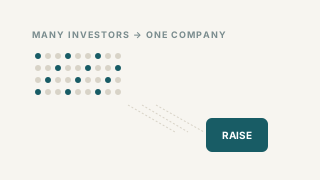
Equity crowdfunding has fundamentally changed who can invest in private companies. Before 2016, investing in a startup or growing private business was essentially off-limits to most people — reserved for venture capitalists, angel investors, and the wealthy. Today, anyone can invest in private companies through regulated online platforms. Here's how equity crowdfunding works and what you need to know before getting started.
What Is Equity Crowdfunding?
Start investing in private companies today
Create your free account and explore investment opportunities on StartEngine.
Equity crowdfunding is the process of raising capital for a business by selling securities — typically shares of stock or other equity instruments — to a large number of investors, usually through an online platform. Unlike donation-based crowdfunding (like Kickstarter, where backers receive products or perks), equity crowdfunding gives investors an actual ownership stake in the company.
When you invest through equity crowdfunding, you become a shareholder. If the company grows and eventually has a successful exit — through an IPO, acquisition, or other liquidity event — your shares may increase in value.
A Brief History
Equity crowdfunding in the United States became possible through the Jumpstart Our Business Startups (JOBS) Act, signed into law in 2012. The JOBS Act was designed to make it easier for small businesses to raise capital and for everyday Americans to invest in them.
The key provisions that enabled equity crowdfunding include:
- Title II (2013): Allowed companies to publicly advertise Regulation D offerings to accredited investors.
- Title IV (2015): Created Regulation A+, allowing companies to raise up to $75 million from both accredited and non-accredited investors.
- Title III (2016): Established Regulation Crowdfunding (Reg CF), allowing companies to raise capital from all investors through registered platforms, with individual investment limits based on income and net worth.
StartEngine was among the first platforms to launch under these new regulations, and has since facilitated hundreds of millions of dollars in investments from hundreds of thousands of investors.
How Equity Crowdfunding Works
Step 1: A Company Creates an Offering
A company looking to raise capital prepares an offering. This includes creating disclosure documents, setting a fundraising goal, determining the price per share, and establishing the terms of the investment. The company must comply with the applicable SEC regulations (Reg CF, Reg A+, or Reg D).
Step 2: The Offering Goes Live on a Platform
The company lists its offering on a registered equity crowdfunding platform. The listing typically includes a description of the business, financial information, the team, risks, and the terms of the deal. Investors can browse offerings and review this information before deciding whether to invest.
Step 3: Investors Review and Invest
Investors evaluate the opportunity and decide how much to invest. Under Reg CF, there are limits on how much an individual can invest in a 12-month period, based on their income and net worth. Under Reg A+, there are generally higher or no individual limits (though companies may set their own minimums).
The investment process is typically straightforward — investors create an account, complete identity verification, review the offering documents, choose an investment amount, and fund their investment.
Step 4: The Company Receives the Capital
Once the offering reaches its minimum funding target (or at scheduled closing dates), the funds are released to the company. The company uses this capital to grow the business — hiring, product development, marketing, expansion, or other strategic priorities.
Step 5: Investors Hold Their Shares
After investing, shareholders hold their equity. The company may provide periodic updates on business progress. Investors wait for a potential return on their investment, which typically comes through a liquidity event at some future date.
The Regulatory Framework
Regulation Crowdfunding (Reg CF)
- Maximum raise: $5 million per year
- Who can invest: Both accredited and non-accredited investors
- Investment limits: Based on annual income and net worth (for non-accredited investors)
- Disclosure requirements: Financial statements (reviewed or audited depending on the amount raised), business description, risk factors, use of proceeds
- Platform requirement: Must be conducted through an SEC-registered funding portal or broker-dealer
Regulation A+ (Tier 2)
- Maximum raise: $75 million per year
- Who can invest: Both accredited and non-accredited investors
- Investment limits: Non-accredited investors can invest up to 10% of income or net worth per offering (self-certified)
- Disclosure requirements: More extensive than Reg CF, including audited financial statements and ongoing reporting
- SEC qualification: Offerings must be qualified by the SEC before launch
Regulation D (Rule 506(c))
- Maximum raise: Unlimited
- Who can invest: Accredited investors only (verified)
- Investment limits: None
- Disclosure requirements: Less formal, but companies must verify investor accreditation
- General solicitation: Allowed under Rule 506(c)
Benefits of Equity Crowdfunding
Democratized Access
The most significant benefit is access. Equity crowdfunding has opened the door for millions of people who previously couldn't invest in private companies. You no longer need to be a venture capitalist or know the right people — you just need an internet connection and a modest amount of capital.
Low Minimums
Many equity crowdfunding offerings accept investments starting at $100 to $500. This makes it possible to build a diversified portfolio of private investments without committing large amounts of capital to any single company.
Transparency
Because offerings are regulated, companies must provide disclosure documents that include financial information, business descriptions, risk factors, and terms. While not as comprehensive as public company filings, these disclosures give investors a solid foundation for making informed decisions.
Community and Engagement
Equity crowdfunding creates a unique relationship between companies and their investors. Many companies actively engage with their investor communities, providing updates, seeking feedback, and building brand loyalty. As a shareholder, you become more than a customer — you become a stakeholder in the company's success.
Risks to Understand
Illiquidity
Shares purchased through equity crowdfunding are generally illiquid. Under Reg CF, there's typically a one-year holding period before shares can be resold (with certain exceptions). Even after the holding period, finding a buyer for private shares can be challenging, though secondary markets are growing.
High Failure Rate
Startups and early-stage companies have a high failure rate. Many companies that raise money through equity crowdfunding will not succeed, and investors may lose some or all of their investment.
Limited Information
While companies must provide disclosures, the depth of information available for private companies is typically less than for publicly traded companies. Making investment decisions with less data requires careful judgment.
Dilution
Future fundraising rounds may dilute your ownership percentage. If a company issues new shares at a later date, your percentage of ownership decreases (though the value of your shares may still increase if the company's overall valuation grows).
Tips for Equity Crowdfunding Investors
- Diversify. Don't invest your entire allocation in a single company. Spread investments across multiple opportunities to manage risk.
- Invest what you can afford to lose. Given the risks involved, only invest capital that won't impact your financial stability if lost.
- Read the offering documents. Take the time to understand the business, the terms, and the risks before investing.
- Think long-term. Private investments typically take years to generate returns. Be patient and avoid expecting quick results.
- Stay informed. Follow company updates and industry developments. Being an informed investor helps you make better decisions over time.
Conclusion
Equity crowdfunding has transformed private market investing from an exclusive club into an accessible opportunity for anyone. By combining regulatory oversight with technology-driven platforms, it has created a new way for companies to raise capital and for investors to participate in the growth of innovative businesses.
While the risks are real — illiquidity, potential loss, and limited information — the opportunity to invest in private companies early in their growth journey is one that millions of investors are embracing. With careful due diligence, diversification, and a long-term perspective, equity crowdfunding can be a valuable component of a diversified investment strategy.
Start investing in private companies today
Create your free account and explore investment opportunities on StartEngine.
Terms in this article
Important disclosure
Investing in private company securities is highly speculative and involves substantial risk. Educational content does not constitute investment advice. Past performance does not guarantee future results.