Fundamentals · GUIDE
Why Invest in Private Companies?
Explore the potential benefits of adding private companies to your portfolio.
6 min read
Updated May 27th, 2026
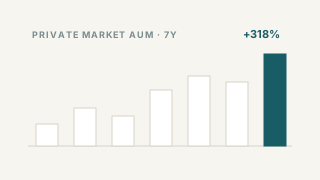
For decades, individual investors have been limited to public stocks and bonds as the primary building blocks of their portfolios. Meanwhile, institutional investors — pension funds, endowments, and family offices — have been quietly allocating significant portions of their portfolios to private companies. Today, thanks to regulatory changes and platforms like StartEngine, everyday investors can access the same types of opportunities. But why would you want to? Here's a comprehensive look at the case for investing in private companies.
The Opportunity in Private Markets
Most Companies Are Private
Of the millions of businesses operating in the United States, only about 4,000 are publicly traded. That means the overwhelming majority of companies — and by extension, the majority of economic activity and innovation — exists in the private market. By limiting yourself to public stocks, you're fishing in a very small pond.
Value Creation Happens Early
Consider the trajectory of a successful startup. A company might be founded, grow rapidly over seven to ten years, and eventually go public at a multi-billion-dollar valuation. By the time retail investors can buy shares on the stock market, much of the company's most explosive growth phase has already occurred.
Early investors in companies like Uber, Airbnb, and Facebook saw their investments multiply many times over before these companies went public. While not every private company becomes a household name, the principle holds: earlier access can mean greater growth potential.
Institutional Investors Already Know This
Major institutional investors allocate 20% to 40% or more of their portfolios to private markets. Yale University's endowment — one of the most successful institutional portfolios in history — has famously allocated heavily to venture capital and private equity. The reason is straightforward: these institutions have found that private market exposure can improve overall portfolio returns while providing diversification benefits.
Key Benefits of Private Company Investing
1. Higher Return Potential
Private market investments, particularly in early-stage and growth-stage companies, have the potential to generate returns that significantly exceed public market averages. While the S&P 500 has historically returned around 10% annually, successful private investments can return many multiples of the original investment.
Of course, this higher potential comes with higher risk. Not every private investment succeeds, and losses — including total loss of capital — are possible. The key is approaching private investing as a portfolio strategy, not a single bet.
2. Portfolio Diversification
Private market returns don't always move in lockstep with public markets. When public stocks decline during a recession or market correction, private company valuations may be less immediately affected (though they're not immune to economic conditions). This lower correlation can help smooth overall portfolio returns and reduce risk at the portfolio level.
Diversification across asset classes is one of the most fundamental principles of investing. Adding private companies to a portfolio that already includes public stocks and bonds introduces a new dimension of diversification.
3. Access to Innovation
Some of the most exciting and transformative companies in the world are private. Whether it's a biotech company developing breakthrough therapies, a fintech startup reimagining banking, or a clean energy company building the infrastructure of the future, private markets are where much of the innovation happens.
By investing in private companies, you can support and participate in the growth of companies working on the technologies and solutions you believe in. Platforms like StartEngine make it possible to browse offerings across industries and invest in companies aligned with your interests and values.
4. Alignment with Founders
In private companies, founders and management teams typically hold significant ownership stakes. This means their interests are closely aligned with those of investors — everyone benefits when the company succeeds. In contrast, executives at large public companies may be more focused on short-term stock price management to satisfy quarterly earnings expectations.
5. Less Market Noise
Public market investors are constantly bombarded with news, analyst opinions, and daily price movements that can trigger emotional decision-making. Private investments, by their nature, are insulated from this noise. You won't see your private investment's value fluctuate every day, which can encourage a more patient, long-term approach to investing.
What to Consider Before Investing
Illiquidity
The most significant tradeoff of private investing is illiquidity. When you invest in a private company, your capital is typically locked up for an extended period — often years. Unlike public stocks, you can't simply sell your shares whenever you want. You should only invest capital that you won't need in the near to medium term.
That said, the secondary market for private shares is growing. Platforms are increasingly offering ways for shareholders to find buyers for their private holdings, though liquidity is never guaranteed.
Limited Information
Private companies provide less financial information than their public counterparts. While companies raising capital through regulated offerings must provide certain disclosures, you'll generally have less data to work with when making investment decisions. This makes due diligence especially important.
Higher Risk
Private companies — particularly early-stage startups — have higher failure rates than established public companies. Many startups don't survive, and even companies that persist may not generate returns for investors. It's essential to approach private investing with realistic expectations and to diversify across multiple investments.
Longer Time Horizons
Private investments typically require patience. A successful exit — whether through an IPO, acquisition, or secondary sale — may take five to ten years or more. If you're investing with the expectation of a quick return, private markets may not be the right fit.
How to Get Started
Determine How Much to Allocate
Financial advisors often suggest allocating a small percentage of your overall portfolio to alternative investments, including private companies. The exact percentage depends on your financial situation, risk tolerance, and investment goals. A common starting point for retail investors is 5% to 10% of their investable assets.
Use a Trusted Platform
Invest through regulated platforms that are registered with the SEC and FINRA. StartEngine, for example, offers a curated selection of private company offerings across multiple industries, with detailed offering pages that include business descriptions, financials, risk factors, and terms.
Diversify Your Private Investments
Just as you wouldn't put your entire public stock portfolio into a single company, you shouldn't put your entire private allocation into one investment. Spread your capital across multiple companies, industries, and stages to improve your chances of participating in a successful outcome.
Do Your Homework
Read the offering documents carefully. Understand the company's business model, competitive landscape, financial position, and the terms of the investment. Look for companies with strong teams, clear market opportunities, and realistic plans for growth.
Think Long-Term
The best private market investors are patient. They understand that building a great company takes time and that the most significant returns often come to those willing to wait.
Conclusion
Investing in private companies offers compelling potential benefits: higher return potential, portfolio diversification, access to innovation, and alignment with long-term value creation. At the same time, it requires accepting illiquidity, limited information, and higher risk.
The democratization of private markets — driven by regulatory reform and platforms like StartEngine — means these opportunities are no longer reserved for the wealthy few. With education, discipline, and a long-term perspective, private company investing can be a meaningful part of a diversified investment strategy.
The key is to start with knowledge. Understand what you're investing in, know the risks, and build a diversified portfolio that aligns with your financial goals and time horizon.
Important disclosure
All content is for educational purposes only and does not constitute investment advice. All investments involve risk, including loss of principal. Please consult with a qualified financial advisor before making investment decisions.

